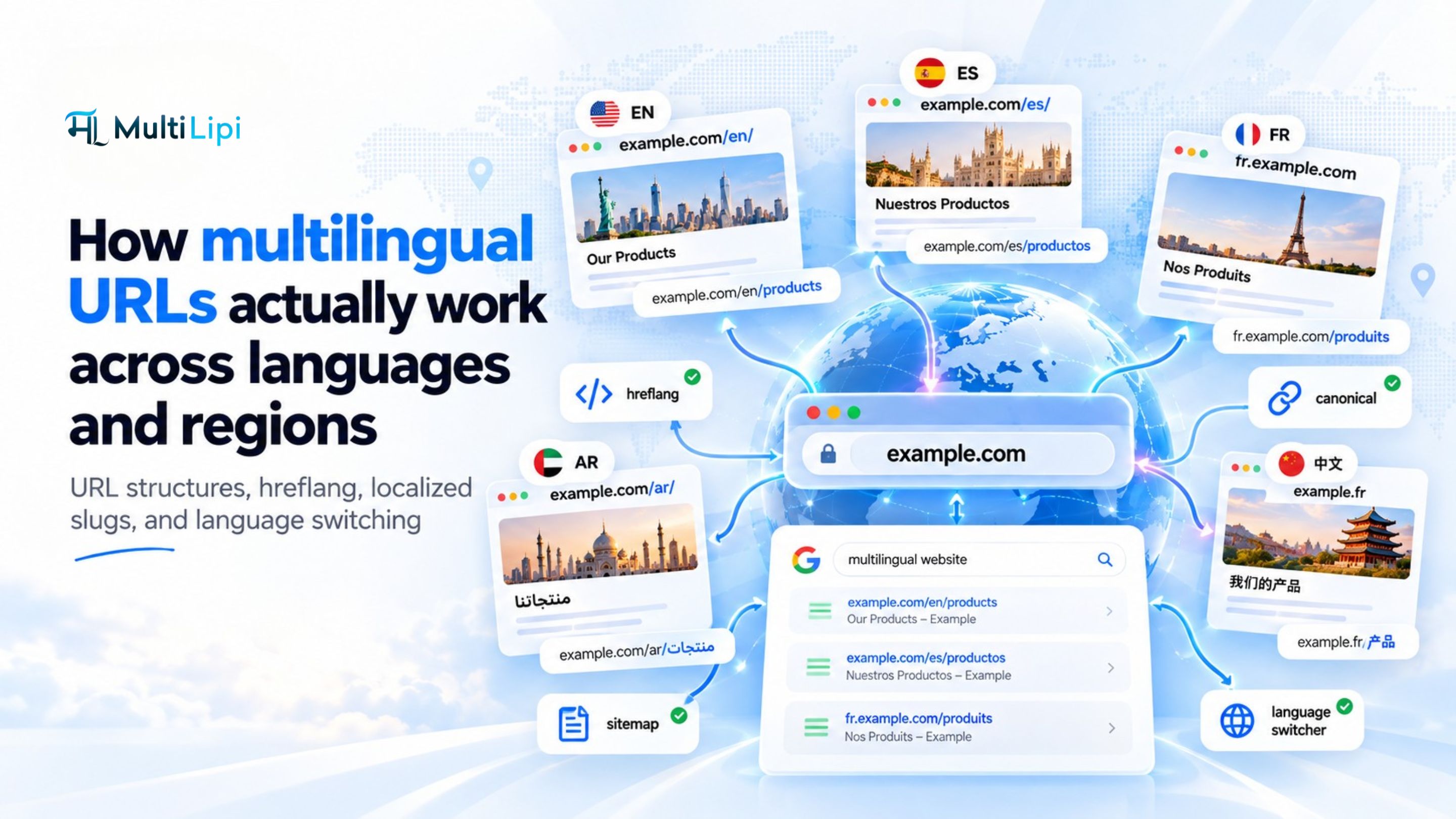
Introduction
Why URL structure matters for multilingual SEO
For global sites, the choice affects how you leverage root-domain authority and how users and search engines experience multilingual switching. Plan with your CMS and hosting to avoid gaps in coverage or mislinked translations. While ccTLDs provide an effective means of geo-targeting by country, allowing for distinct branding and hosting regions, it’s essential to consider the benefits of multilingual content without geo-targeting, which can enable a more unified global presence. Balancing these strategies can help you reach a diverse audience while optimizing for search engine relevance.
Overview of subdirectories and subdomains in multilingual setups
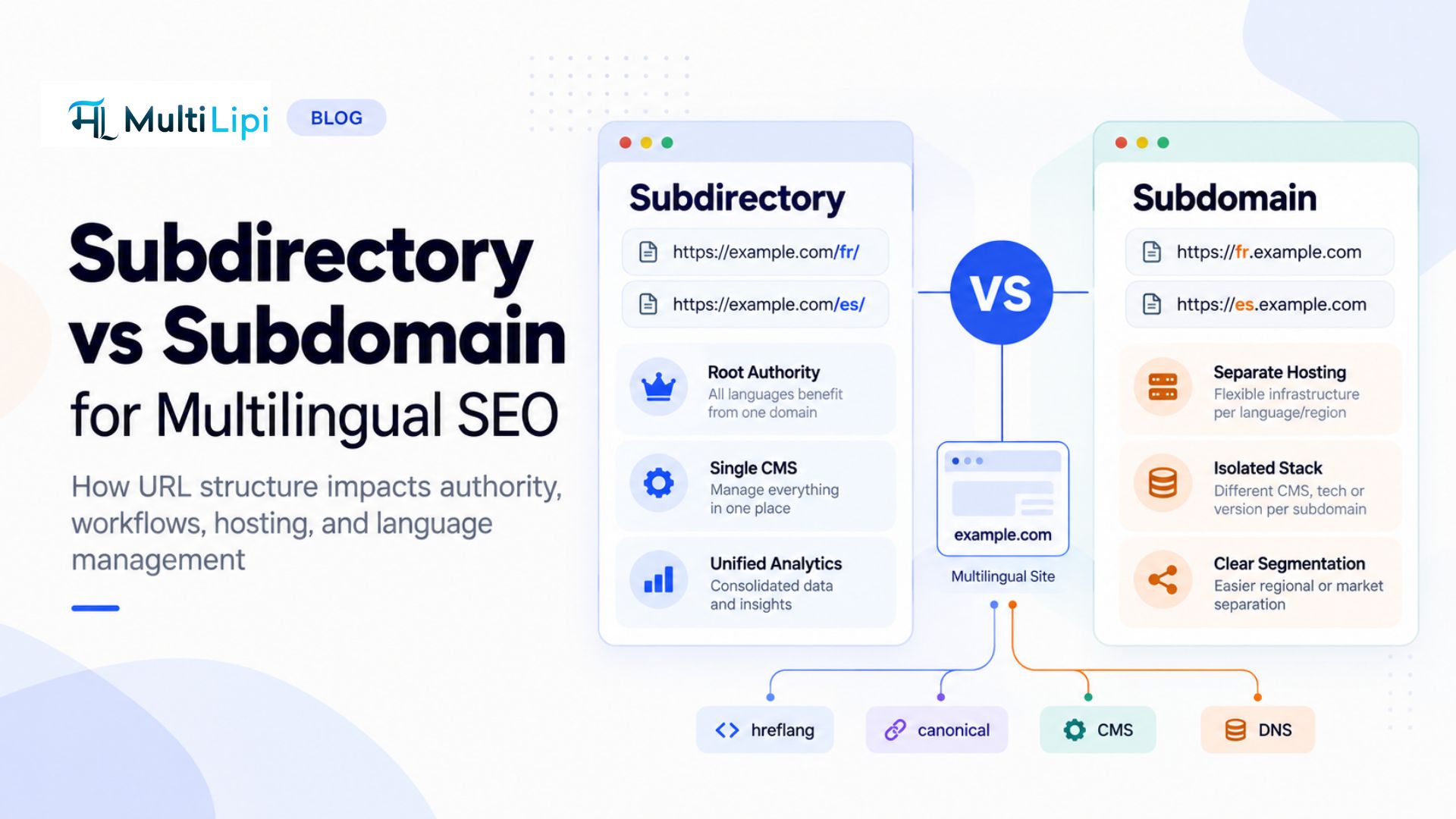
Subdirectories place language content under one domain, creating a single hosting and analytics footprint. This approach is common for translated sites and often eases management and authority transfer.
Subdomains give each language its own hostname, enabling separate hosting or teams. This can simplify operations when different stacks or providers are involved, but may require extra setup in crawlers and analytics.
Subdirectory
Centralizes authority, hosting, analytics, and content operations under the root domain.
Subdomain
Creates a separate hostname that can isolate infrastructure, teams, analytics, and language workflows.
- Subdirectories are strongest when teams want centralized CMS, analytics, authority, and maintenance.
- Subdomains become useful when languages genuinely need isolated hosting, stacks, teams, or access controls.
- Hreflang, canonicals, internal linking, and crawlability still determine whether either structure works cleanly.
Understanding Subdirectories for Multilingual SEO
Impact on domain authority and internal linking
Subdirectories let the main domain accumulate authority from all translated pages. Internal links within the same domain pass link equity to adjacent language versions, strengthening unified ranking signals.
Managing translations in one place improves crawl efficiency and reduces duplicate management overhead. The unified analytics view helps you compare performance across languages without separate property setups.
- Single hosting footprint and one Search Console property
- Simplified content updates across languages
- Consistent user experience with centralized branding
Understanding Subdomains for Multilingual SEO
Definition and how it works across languages
A subdomain creates a separate hostname for each language, such as fr.example.com or es.example.com. Each subdomain can host its own language version, with content served from distinct hosting environments if needed. This setup is common when teams or technology stacks differ by language, or when a site requires isolated configurations for each locale.
From a search engine perspective, Google treats subdomains as separate properties. Language signals come from content and hreflang annotations, while crawl priority can be influenced by how the subdomain is linked from the root site and how its internal structure is organized. For a deeper dive, consider understanding subdomains for multilingual SEO.
Impact on hosting, branding, and crawl behavior
Hosting and infrastructure can be decoupled by language with subdomains. This enables separate hosting plans, DNS configurations, and even dedicated content delivery strategies for each language.
Branding may feel more localized, as each language variant presents its own site identity. Crawl behavior can become more granular, allowing targeted indexing setups. However, it often requires additional tracking and analytics setup per language to effectively capture and analyze language-specific performance, providing deeper insights into user engagement across different regions.
- Separate hosting or teams per language
- Independent analytics and dashboards per subdomain
- Potentially clearer segmentation for complex localization workflows
Technical Considerations for Language Targeting
URL structure and language signals
Google uses page content to determine which countries or language groups make sense for your business, not the URL alone. Your language signals come from visible content, metadata, and hreflang annotations. Subdirectories and subdomains can work, but the URL should reflect the language when possible.
Avoid relying on URL parameters like ?lang=fr for primary targeting. Parameterized URLs can complicate crawling and indexing. Use dedicated paths or hostnames to signal language consistently.
Hreflang implementation and canonicalization
Hreflang tags indicate which page matches each language and region, helping prevent duplicate content across translations and guiding users to the right variant. Proper hreflang implementation is crucial, as missing or incorrect tags can lead to search engines not understanding your content's relevance, resulting in lost traffic. To avoid these pitfalls, follow hreflang implementation guidance carefully and ensure that you implement hreflang across all language versions, confirming that every page has a complete and accurate set of tags for its siblings. In addition to this, incorporating canonicalization best practices in multilingual SEO is essential for signaling to search engines which version of a page should be prioritized, thereby enhancing organization and reducing the potential for confusion among similar pages across different languages.
Canonicalization should be careful in multilingual SEO. One common mistake is using cross-language canonical links, which can inadvertently collapse translations and confuse search engines. Instead, canonical tags should point to the most representative page within each language group, ensuring that clear canonical relations are maintained within each language family. By avoiding these pitfalls, you can preserve distinct indexing signals and enhance overall search visibility across different languages.
Performance and Maintenance Implications
Content management and CMS integration
Your CMS choice shapes how multilingual content scales. Subdirectories align with a single CMS instance, centralizing updates and streamlining translators and editors. This reduces duplicate setup when languages share templates and plugins.
Subdomains may require separate CMS instances or distinct configurations for each language. This can improve isolation but adds maintenance, updates, and plugin management overhead across hosts.
- Centralized translation workflow with subdirectories
- Isolated management for each language with subdomains
- Consistency of templates and themes across languages is easier in one system
Site speed, hosting, and maintenance overhead
Performance depends on hosting and infrastructure. Subdirectories benefit from a single hosting footprint, simplifying caching and CDN setup. This often means faster optimization and fewer edge cases during updates.
Subdomains allow separate hosting environments, which can tailor resources per language. This can boost per language performance but requires careful DNS, TLS, and cache management to control latency.
SEO Impact and Case Scenarios
When subdirectories are advantageous for multilingual SEO
Subdirectories can strengthen the root domain authority by consolidating signals across language variants. This often improves overall indexing and simplifies cross-language internal linking.
For sites with a unified content strategy and a modest number of languages, subdirectories streamline hreflang implementation and canonicalization on a single domain, offering significant subdirectory SEO advantages for multilingual sites. In contrast, using subdomains can lead to subdomain SEO disadvantages in multilingual contexts, as they may fragment authority across multiple domains, complicating efforts to consolidate SEO strength. This approach not only enhances user experience and aligns keyword targeting across languages but also positively influences the main domain authority by consolidating the SEO efforts within a single framework. Such consistency can lead to stronger overall visibility and ranking potential across all language variations, making it an optimal choice for managing multilingual content.
When you expect frequent content updates and want uniform templates, subdirectories reduce maintenance complexity. They align with standard hosting and DNS configurations, which eases centralized management.
When subdomains are advantageous for multilingual SEO
Subdomains excel when you need separate hosting or distinct tech stacks per language. This separation can contain performance, security, and configuration issues within each locale.
If a language requires dedicated automation workflows, separate analytics properties, or unique branding, subdomains offer clearer segmentation. They also simplify access control and workflow distribution across multilingual teams. However, as illustrated in the migration case study: subdomain to subdirectory, transitioning to a subdirectory approach can streamline content management and enhance SEO efficiency while still maintaining essential organizational benefits.
Subdomains provide a practical path when translations cannot safely be served in folders or when certain locales demand isolated infrastructure. They still support language signals through content and hreflang tags, while keeping the backend distinct.
"Dominating the root domain with well-organized subdirectories concentrates SEO signals where they matter most, while subdomains are best reserved for clearly separated, isolated language or regional variants that require distinct hosting or tech stacks." , Industry Analyst
- Map every language URL before moving between folders and hostnames.
- Redirects, hreflang, canonicals, DNS, TLS, sitemaps, and analytics must change as one coordinated release.
- Stage the move, keep a rollback path, and monitor crawl errors and indexation by locale after launch.
Practical Implementation Guidelines
One-line code integration and localization workflow with MultiLipi
Streamline multilingual routing by integrating a localization workflow into your CMS. Ensure the workflow emits language variants in the chosen URL structure and auto generates language specific sitemaps. Keep the process language aware from content creation to publishing.
For a quick setup, standardize language flags in your templates and ensure the backend passes the correct locale to the rendering layer. This helps search engines index the right variant without extra steps.
Operational steps for migrating between structures
- Audit existing content and map language variants to target URLs, noting any redirects needed.
- Choose a migration path aligned with your hosting and CMS capabilities, then configure DNS, TLS, and routing rules accordingly.
- Implement hreflang and canonical signals for the new structure, validating them with crawler tests and logs.
- Set up analytics properties for each language if using subdomains, or a single property for subdirectories, then verify data flows.
- Run a staged migration with a rollback plan and monitor crawl errors, indexing status, and site speed per language variant.
FAQ
What is the main difference between a subdirectory and a subdomain for multilingual sites?
A subdirectory sits under the root domain as a path like example.com/fr, while a subdomain uses a separate host such as fr.example.com. When considering the subdirectory vs subdomain SEO fundamentals, particularly for multilingual sites, the choice between them significantly affects how search engines perceive site authority, hosting, and language signals. Google's handling of subdomains vs subdirectories is crucial, as it treats subdomains as separate properties, leading to distinct SEO considerations that can impact search visibility and performance across different languages. This distinction directly relates to the impact of root domain authority vs child domains, which influences how search engines distribute authority and trust across your site. With multilingual sites, the effects of subdomain SEO on backlinks and link equity further complicate this picture; because subdomains are viewed as independent entities, the backlinks pointing to them may not contribute as effectively to the parent domain's link equity, especially when each language version is hosted separately. Consequently, strong root domain authority can enhance the effectiveness of backlinks directed at both subdirectories and subdomains, while also determining the distribution of link equity across different structures. Ultimately, the architecture matters for backlink authority, as strong backlink profiles can bolster overall search visibility, regardless of whether they are directed at subdirectories or subdomains, particularly in the context of serving multilingual audiences.
Which structure is generally easier to manage, especially when considering the implications of keyword distribution and dilution across subdomains?
Subdirectories are usually easier to manage within a single CMS and hosting environment. Subdomains require separate DNS records and potentially reverse proxy configurations, plus distinct analytics setups. For many teams, subdirectories keep management centralized and streamline updates across languages.
Does one structure hurt or help SEO for multilingual content, especially when considering the implications of switching from subdomains to subdirectories? Migration considerations can play a significant role in how search engines interpret and rank your content across different languages.
There is no universal rule. Subdirectories often concentrate authority on the root domain, which can boost overall SEO. Subdomains can offer clearer segmentation when languages need isolated infrastructure or distinct tech stacks, but they may dilute backlink and keyword authority across multiple domains.
How do hreflang and canonical tags work with these structures?
Hreflang signals help search engines understand language variants regardless of structure. Canonical tags should point to the preferred variant within the same language group to avoid duplicate content. Proper hreflang implementation is critical for multilingual SEO and can be automated by platforms like Weglot.
What about performance and hosting implications?
Subdirectories typically leverage a single hosting footprint and unified caching, which can simplify performance tuning. Subdomains may allow per language optimization but require careful DNS, TLS, and cache management to avoid latency spikes.
When should I consider migrating between structures?
Consider migration when hosting constraints, CMS capabilities, or branding needs change. Plan a staged move with redirects, updated sitemaps, and comprehensive crawl testing to preserve indexing. The decision should weigh root domain authority, keyword dilution, and backlink strategy across languages.
"Before you think about rankings, you need to think about the business itself; how the chosen structure aligns with teams, workflows, and measurement‑of‑success, because SEO is affected by structure only insofar as it serves how you operate." , Industry Analyst
Conclusion
Choosing between subdirectories and subdomains for multilingual SEO hinges on hosting, tooling, and how you want to organize language workflows. Each structure brings distinct trade offs for authority, crawl behavior, and management overhead.
Subdirectories promote unified domain authority and simplify content management within a single CMS and hosting environment. They are ideal for teams seeking streamlined operations and easier internal linking across languages, helping to concentrate SEO strength on the root domain.
Subdomains provide clearer segmentation when languages require isolated hosting, separate analytics, or distinct tech stacks. They can reduce cross-language risk and enable targeted performance optimizations per locale, which supports geo-targeting and product differentiation.
At MultiLipi, we align your URL strategy with your localization workflow. Our one-line code integration and editable translations support both structures, ensuring language signals are accurate and scalable across global sites. You can structure your multilingual experience to fit your hosting, DNS, and CDN setup while maintaining consistent SEO fundamentals.
Regardless of structure, focus on accurate language targeting signals, reliable hreflang implementation, and cohesive canonical practices. Regularly review crawl behavior and indexing per language variant to keep your international reach healthy and measurable.
"Subdomain or subdirectory decisions should be guided by clear language-targeting signals, reliable hreflang implementation, and cohesive canonical practices, with each structure chosen to optimize localization while preserving overall crawlability and domain authority." , Industry Analyst
Use these guides and tools to validate language routing, hreflang, canonicals, and multilingual SEO implementation before and after launch.